

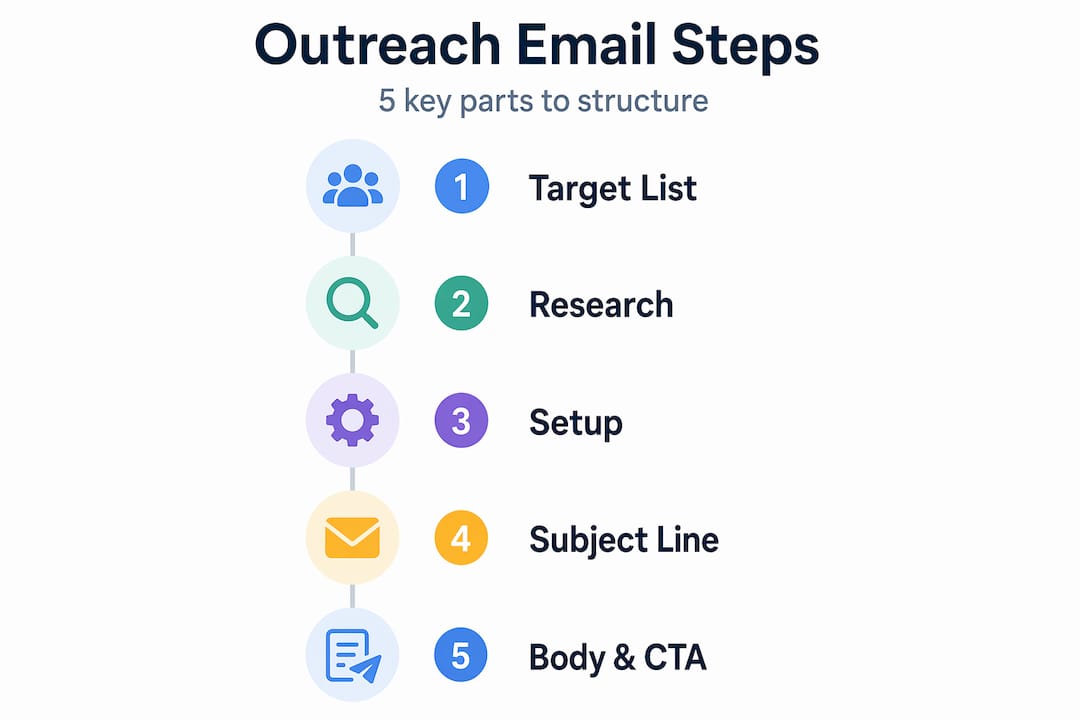
Most B2B outreach emails fail before anyone reads the copy. The subject line gets ignored, the domain lands in spam, or the list is so broad that even a great message reaches the wrong person. Knowing how to structure outreach email correctly is what separates teams generating consistent pipeline from those recycling the same tired templates with a 1% reply rate. This guide covers the full picture: targeting, technical setup, writing frameworks, and sequencing, so you can build outreach that actually converts in 2026.
- Set up infrastructure and warm up your sending domain
- Craft subject lines and opening lines that compel opens
- Structure the email body with clarity and precision
- Plan your outreach sequence and follow-ups strategically
- Why most outreach emails fail despite good copy
- Improve your outreach success with SphereScout's B2B email lists and lead generation tools
- Frequently asked questions
Key Takeaways
| Point | Details |
|---|---|
| Targeting is foundational | Narrow ICPs and personalization greatly improve reply rates over generic emails. |
| Infrastructure matters | Domain authentication and gradual warm-up protect your sender reputation and inbox placement. |
| Keep it concise | Emails under 125 words with one simple CTA get better engagement from busy prospects. |
| Follow-up strategically | Use a 4-step sequence with varied value and a breakup email to maximize replies and avoid list burnout. |
| Compliance is mandatory | Including accurate physical address and honoring opt-outs within 10 business days is required by law and improves trust. |
How to structure outreach email: start with research, targeting, and compliance
To craft emails that engage, first build a solid foundation with targeted lists and legal compliance.
Precision targeting is the single biggest lever you have before you write a word. A well-researched list of 200 ideal-fit contacts will outperform a spray-and-pray list of 2,000 every time. Define your ICP (ideal customer profile) by industry, company size, job title, and buying signals such as recent funding rounds, new product launches, or leadership changes. These triggers give you a natural, credible reason to reach out.
Once your list is tight, research each contact before writing. Referencing a specific company announcement or a recent LinkedIn post in your opener instantly separates your email from generic outreach. Tools for finding business contacts can help you build lists faster, but the research layer still needs your attention.
CAN-SPAM compliance is non-negotiable. The law requires a valid physical postal address and an opt-out honored within 10 days in every commercial email. Beyond the legal obligation, compliance directly affects deliverability. Confirm your email list verification process removes invalid and role-based addresses before you send anything.
Here is a quick compliance and targeting checklist:
- ICP defined by industry, title, company size, and buying signal
- Each contact verified for accuracy and relevance
- Physical business address included in the email footer
- One-click unsubscribe link present and functional
- Opt-outs processed within 10 business days
| Preparation area | Why it matters | Risk if skipped |
|---|---|---|
| ICP targeting | Higher reply rates from relevant contacts | Low engagement, wasted sends |
| List verification | Reduces bounce rate | Domain reputation damage |
| CAN-SPAM compliance | Legal requirement | Fines and blacklisting |
| Trigger research | Enables personalized openers | Generic, low-response emails |
Set up infrastructure and warm up your sending domain
With targeted lists and compliance in place, technical setup ensures your emails actually land in the inbox.
Most B2B teams skip this part entirely. They use their primary company domain, send 200 emails on day one, and then wonder why replies dried up after two weeks. The answer is almost always deliverability, not copy.
Step 1: Use a dedicated sending domain or subdomain. Keep your primary domain clean. Set up something like mail.yourcompany.com or outreach.yourcompany.com for all cold outreach.
Step 2: Authenticate the domain. You need three records configured before sending a single email:
1. SPF (Sender Policy Framework): Tells receiving servers which IPs can send on your behalf.
2. DKIM (DomainKeys Identified Mail): Adds a cryptographic signature to prove the email was not tampered with.
3. DMARC: Instructs receiving servers how to handle emails that fail SPF or DKIM checks.
Step 3: Warm up gradually. Domain warm-up takes 4 to 8 weeks with gradual volume increases to build sender reputation. Start with 5 to 10 emails per day, then increase by 10 to 15 emails per week. Use your email verification guide to ensure every address you send to during warm-up is valid.
Step 4: Cap your daily volume. Even after warm-up, limit each mailbox to 25 to 30 outreach emails per day for consistent inbox placement.

Pro Tip: If you are running outreach at scale, consider using multiple sending accounts across different subdomains rather than pushing volume through a single inbox. This distributes sending load and protects your domain reputation long-term.
| Warm-up phase | Week | Daily email volume |
|---|---|---|
| Early | 1 to 2 | 5 to 15 |
| Mid | 3 to 4 | 20 to 40 |
| Late | 5 to 6 | 50 to 80 |
| Post-warm-up | 7+ | 25 to 30 per mailbox |
Pair this with smart email marketing strategies and your foundation is solid.
Craft subject lines and opening lines that compel opens
After ensuring deliverability, the next critical step is to get your email opened with compelling subject and opening lines.
Your subject line has one job: get the email opened. That is it. It does not need to explain your product, tease a discount, or promise a transformation. It just needs to create enough curiosity or relevance that the recipient clicks.
The most effective subject lines in cold outreach for B2B in 2026 are 4 to 7 words, specific to the recipient or their industry, and free of clickbait phrasing. Think "Quick question about [Company]'s SDR process" instead of "Boost your sales by 300% today."
What to avoid in your subject line:
- All caps or excessive punctuation
- Spam trigger words like "free," "guaranteed," or "limited offer"
- Vague phrases like "Checking in" or "Following up"
- Your company name unless the recipient already knows you
Once they open the email, your first line determines whether they keep reading. This is where personalization earns its value. Reference something specific: a podcast episode they appeared on, a recent hire they announced, a product update you noticed. Generic openers like "My name is John and I work at..." get deleted instantly.
Pro Tip: Write your opening line last. Draft the value proposition and CTA first, then write an opener that flows naturally into that message. This keeps your first line tight and purposeful rather than rambling.
Keep your subject and opening line work separate from your template library. Review your cold email best practices regularly as inbox behavior shifts with algorithm updates from major providers.
Structure the email body with clarity and precision
Once you have opened the email, carefully structure the body to maintain engagement and prompt a reply.
Decision-makers scan, they do not read. That means you have about eight seconds to communicate relevance and earn a response. Cold emails under 125 words with one low-friction CTA significantly outperform longer emails with multiple asks. Every sentence must earn its place.
Use one of these two frameworks to structure the body:
1. Problem-Solution: Name a specific problem your target faces, then explain concisely how you solve it. Works well when the pain point is well-known in the industry.
2. Before-After-Bridge: Describe the prospect's current situation, paint the outcome they want, then bridge the gap with your solution. Useful when you need to shift their thinking first.
Here is what each approach looks like in practice:
| Framework | Best used when | Example opening |
|---|---|---|
| Problem-Solution | Pain point is obvious and acknowledged | "Most SDR teams at Series B companies lose 30% of pipeline to bad data..." |
| Before-After-Bridge | Prospect may not recognize the problem | "Right now, your team is likely spending 4 hours a week on manual prospecting..." |
The CTA is where most emails break down. Asking for a 30-minute demo, a proposal review, and a budget conversation in the same email is a fast way to get no reply. One ask. Make it low-commitment. "Worth a 10-minute call this week?" works far better than "Would you like to schedule a full demo with our team?"
Pro Tip: Use plain text formatting for cold outreach. HTML templates with images and tracking pixels are more likely to trigger spam filters and signal mass marketing, not a genuine one-to-one conversation.
Study high-response email examples to see these frameworks in action, and align your approach with the B2B email campaign types that suit your pipeline stage.
Plan your outreach sequence and follow-ups strategically
After sending a crisp initial email, following up thoughtfully is crucial to convert leads effectively.
Most replies in cold outreach do not come from the first email. They come from the second or third touchpoint, when the timing finally aligns for the recipient. But following up badly is worse than not following up at all. Sending "Just checking in" three times in a row is a sequence in name only.
A 4-step sequence over 14 days with a breakup email at the end outperforms longer sequences, protects list health, and generates more replies than seven-step marathons that exhaust the recipient.
Here is a sequence structure that works:
1. Day 1: Initial email. One clear problem-solution angle. Single low-friction CTA.
2. Day 4 to 5: Follow-up with a new value angle. Share a brief case study or relevant stat.
3. Day 9 to 10: Try a different medium or angle. Reference a LinkedIn post, share a short piece of content.
4. Day 14: Breakup email. Keep it honest and brief. "I will stop reaching out after this. If the timing changes, happy to reconnect."
Follow-up best practices:
- Wait at least 3 to 4 business days between touches to avoid appearing pushy
- Never repeat the same message verbatim
- Add something new: a stat, a relevant story, or a direct question
- Use LinkedIn as a parallel touchpoint to add context without overwhelming the inbox
Pro Tip: A well-written breakup email often generates more replies than any previous step. It removes pressure, and sometimes that is exactly what a prospect needed before responding.
Build your full outreach cadence around the B2B email marketing process that fits your sales cycle and buyer journey.
Why most outreach emails fail despite good copy
Here is the uncomfortable truth: most teams obsess over writing better emails when their actual problem is infrastructure and targeting. Poor deliverability and broad ICP targeting cause more campaign failures than weak copy ever will.
Think about it this way. If your domain is not warmed up and authenticated, your emails are landing in spam. No amount of clever subject lines will fix a deliverability problem. Authentication and warm-up are not optional extras. They are the foundation everything else sits on, and they take weeks to build. Planning them as an afterthought is how you burn a new domain in 30 days.
Broad targeting is the second quiet killer. When your list includes anyone with "manager" in their title regardless of industry, company size, or actual fit, your reply rate tanks. Even the most personalized email reads as irrelevant when the recipient genuinely is not a good prospect. Tight lists and smart cold emailing best practices go together.
The micro-CTA only works when the other pieces are right. A question like "Worth a quick call?" generates replies when it lands in inbox, reaches a well-targeted contact, and follows a relevant opener. On a cold domain sent to a broad list, the same CTA generates nothing. Context is everything.
My honest recommendation: before you write a single email, map out your infrastructure timeline. If you are starting from scratch, budget six weeks before your first real campaign send. Use that time to warm your domain, verify your list, and research your ICP thoroughly. The email provider setup details matter more than your headline in the first month.
Improve your outreach success with SphereScout's B2B email lists and lead generation tools
You now know how to structure effective outreach emails from the ground up. The next variable is list quality, and that is where many mid-sized B2B teams hit a wall.
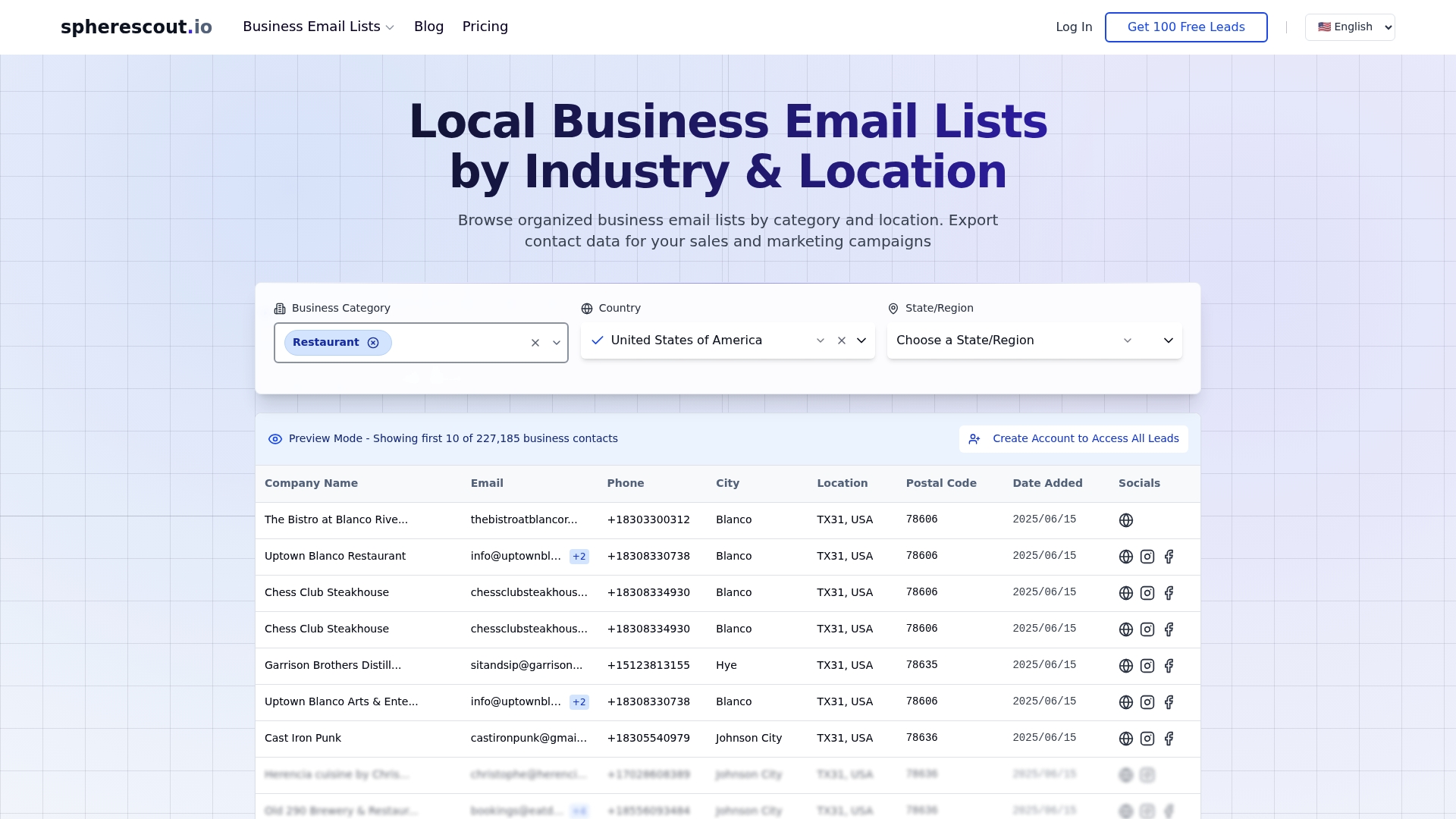
SphereScout gives you access to a database of over 30 million verified business contacts, filterable by industry, location, job title, and company type. You can build a precise ICP-matched business email lists in minutes, export as CSV for CRM or email tool integration, and ensure your outreach starts with clean, current data. Pair that with SphereScout's lead generation solutions to accelerate your prospecting and feed your sequences with the right contacts from day one.
Frequently asked questions
What is the ideal length for an outreach email?
Keep your outreach emails under 125 words to respect busy decision-makers' time. Short emails get scanned quickly, increasing the chance of a reply.
How important is email domain warm-up before sending outreach campaigns?
Domain warm-up is critical and should unfold over 4 to 8 weeks with gradual volume increases. Skipping warm-up risks landing every email in spam and damaging your sender reputation permanently.
Why should I avoid multiple CTAs in my outreach emails?
Multiple CTAs force the reader to make multiple decisions at once. A single low-friction CTA reduces cognitive load and makes it easier for the prospect to say yes.
What are the key CAN-SPAM compliance requirements for outreach emails?
You must include a valid physical postal address and a working opt-out link, and honor unsubscribes within 10 days. Non-compliance risks fines and blacklisting across major email providers.
How many follow-up emails should I send in a cold outreach sequence?
A 4-step sequence over 14 days ending with a breakup email outperforms longer sequences. It generates more replies without burning out your list or annoying prospects.
Recommended
- B2B Email Marketing Process for Lead Generation Success | spherescout.io Blog
- 7 High-Response Email Outreach Examples for B2B Teams | spherescout.io Blog
- Email marketing strategies that drive real B2B results | spherescout.io Blog
- B2B email campaign types that drive lead generation | spherescout.io Blog